If you’re out and about at 2pm on Monday, July 27, and you suddenly hear a blaring alarm everywhere, don’t worry. It’s just a test! The Australian government will be trying out AusAlert, a new national emergency warning system. On the day, all compatible devices around the country will receive a test alert, to make sure that the system works before a real emergency. This includes most smartphones, smart watches and tablets. The AusAlert system is expected to be in operation in October.
AusAlert emergency warning test
This new emergency warning system will use cell-broadcast technology to send out urgent messages to phones in a specific area. They will warn people of hazards and threats, such as bushfires, floods, terrorism and biohazard outbreaks.
AusAlert messages can be targeted to areas within 160 metres, such as a single building, allowing you to receive precise evacuation messages. These are not text messages (SMS), which means alerts can be sent when mobile networks are busy, and you won’t need a SIM card to receive an alert.
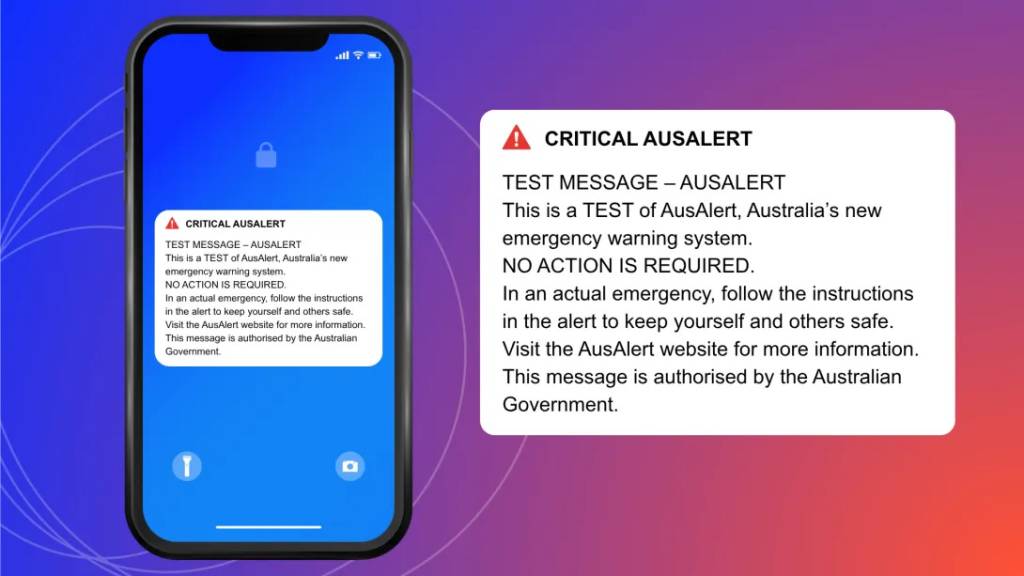
There will be two types of warning levels. The highest level is a critical alert, which will be intrusive, have a fixed volume and have a unique ring tone and vibration. It will also override settings such as ‘Do Not Disturb’, so you won’t miss it or opt out of it. The next warning level is the priority alert, which users can opt out of.
The test will be for a critical alert. During the test, you should see a message appear on your home screen, and hear a siren-like alarm for 10 seconds. Your device will vibrate and make the sound, even if it is set to silent or do not disturb.
If you are hiding a device for safety reasons, you should turn it off, or switch it to aeroplane mode one hour before the test begins. Keep it off for 24 hours. To learn more about staying safe during the test, click here.
What happens if you don’t receive an alert?
During testing, you might have a different experience, based on your device, setting, location and mobile network. Some people might receive it later than expected. If you don’t receive the alert, you don’t need to do anything. You might not have a compatible device, it may not have the latest update, or you might not be connected to a mobile tower. After the test, you can provide feedback, to help the experts work on the system before AusAlert is used in a real emergency.
The test is expected to work on:
- iPhones 11 and up, running iOS 26.4 or later
- Apple Watch SE2, SE3, Series 6 and up, running watch OS 26.4 or later
- Android devices running Android 12 or later
Older Android phones, and phones that don’t use iOS or Android, might still receive an alert. Apple iPads won’t receive the alert.
To read more about it, click here.