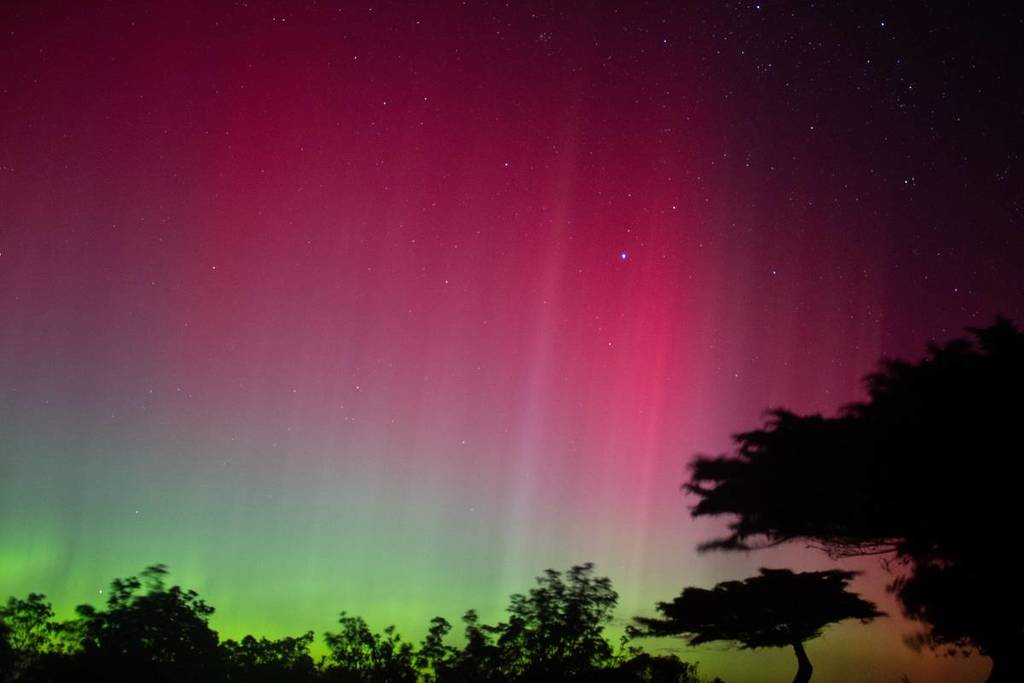

Whether you’ve always dreamed of seeing the southern lights, or you’re addicted to chasing the aurora, we’ve got some good news. The Australian Space Weather Forecasting Centre (ASWFC) issued an aurora watch yesterday evening, stating that it might be possible to see the southern lights in Victoria in the next 24-48 hours, due to recent solar activity. If conditions are favourable, they will upgrade their statement to become an aurora alert. So, if you’re feeling cautiously optimistic, here’s what we know so far.
What is an aurora watch?
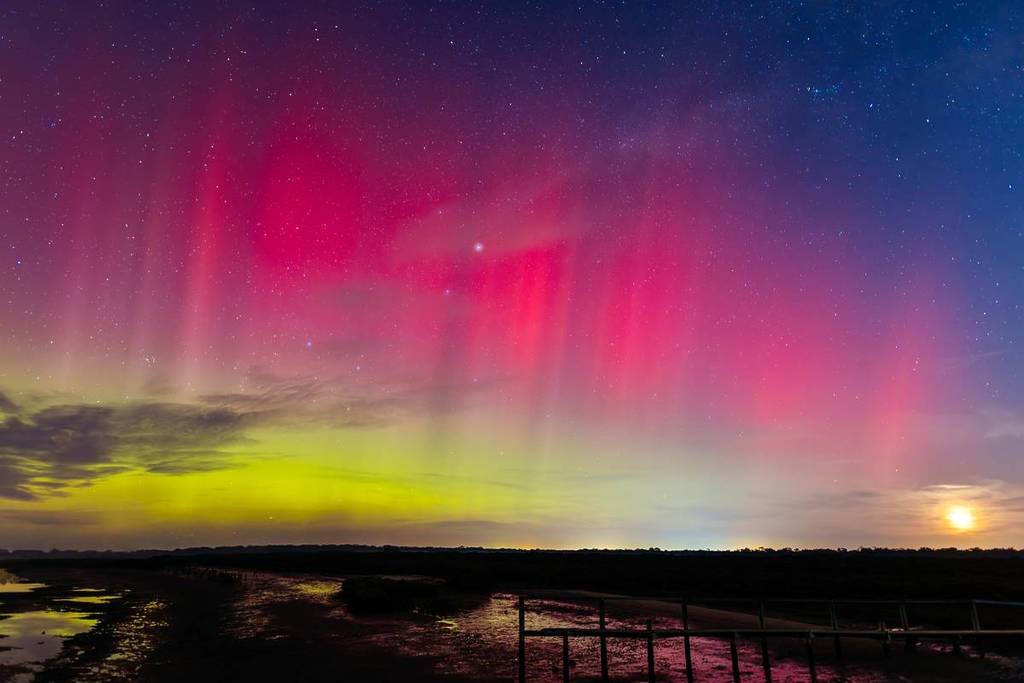
An aurora watch is a warning of up to 48 hours. They are issued by the ASWFC when there is a significant coronal mass ejection or coronal hole that is likely to lead to geomagnetic activity. A coronal mass ejection occurs when clouds of plasma and magnetic fields erupt in the Sun’s outer atmosphere. When these particles, carried by solar wind, interact with the Earth’s magnetic field, they create the dancing colours of red, purple and green.
In this particular case, the ASWFC issued an aurora watch due to “several coronal mass ejections”, associated with two M-class and one X-class solar flares. This would possibly lead to significant geomagnetic activity, and visible auroras in far southern Victoria and Tasmania.
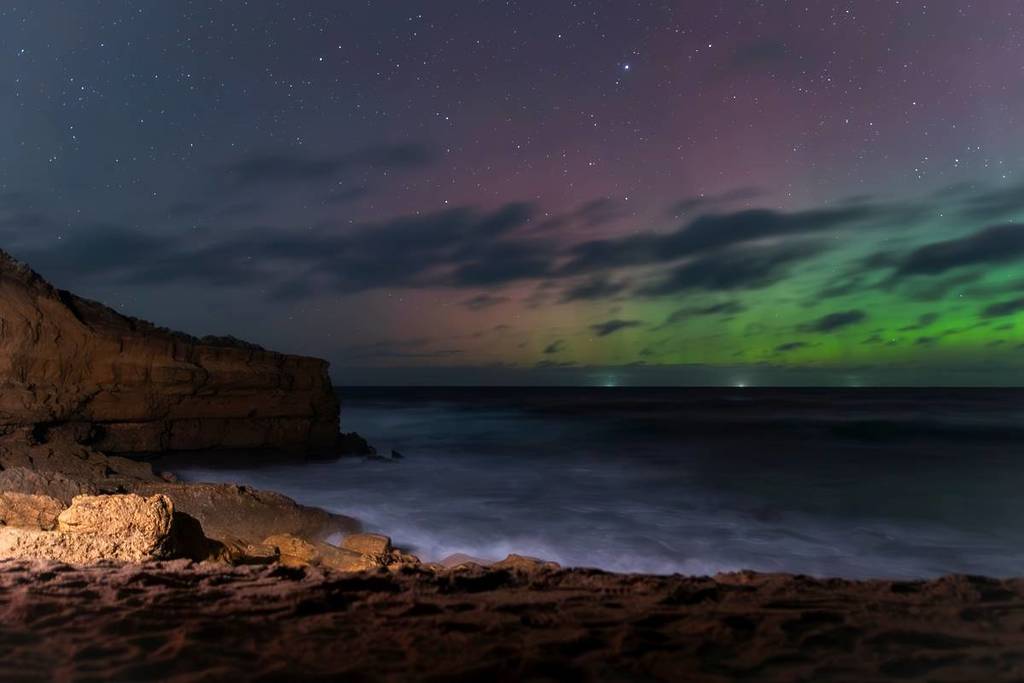
A moderate geomagnetic storm (G2) has been forecast for today (June 5), with a chance of G3. Under G2 conditions, auroras can be visible from Tasmania and southern Victoria, including Melbourne. Under G3 conditions, the likelihood increases, with auroras visible in dark-sky locations across the south of Australia.
Sadly, the forecast for tomorrow is for a minor geomagnetic storm (G1), so unless something changes, the best time to look at the skies is tonight.
If there is significant geomagnetic activity, the ASWFC will change their notice to an aurora alert. These alerts are issued when conditions are favourable for seeing the southern lights, and they usually indicate which parts of Australia the aurora will be visible.
So, keep your eyes on the website, and hope for a cosmic show. You can also check out other handy websites and resources, like Space Weather Live or Aurora Hunters Victoria.

Finding aurora australis in Melbourne
To see the southern lights, you’ll need to rug up, then find somewhere dark with a view to the south. Looking out over the ocean is a particularly good plan, because it’s flat and you don’t have to worry about light pollution getting in the way. But, if you can’t make it to the coast, you can still see the aurora inland, as long as there aren’t any obstructions like mountains or buildings blocking the view.
Allow time for your eyes to adjust to the darkness. This can range from ten to twenty minutes. You’ll also need to adjust your expectations, because what your eyes see and what your camera sees are different. While you might be expecting vivid colours of greens and reds, the naked eye will more likely see moments of brightness, like a flickering white light. Cameras, which have a longer exposure, can pick up the colours to create the spectacular photos you’re more familiar with. When the particles interact with oxygen in our atmosphere, they give off a green and red light, whereas nitrogen creates gorgeous hues of blue and purple.
Keep in mind that this is a natural phenomenon, and sightings aren’t guaranteed.
For ideas on good places to see the aurora australis in Victoria, click here.