Major safety upgrades along one of the Bellarine Peninsula’s busiest roads have wrapped up, with authorities hoping the changes will significantly reduce crashes on a route used by tens of thousands of drivers each day.
The Bellarine Highway—an essential link between Geelong and coastal towns—has undergone an $8.58 million overhaul targeting some of its most high-risk points, particularly through Wallington and Moolap.
The project forms part of the joint Federal and Victorian Government Road Safety Program, with each contributing $4.29 million. Crews installed around seven kilometres of safety barriers along key stretches of the highway, aiming to reduce the severity of head-on collisions.
The upgrades also reworked several intersections long considered dangerous by locals, including Swan Bay Road in Wallington and both Greenside Grove and Resort Boulevard in Moolap.
Safer turns & smoother flow
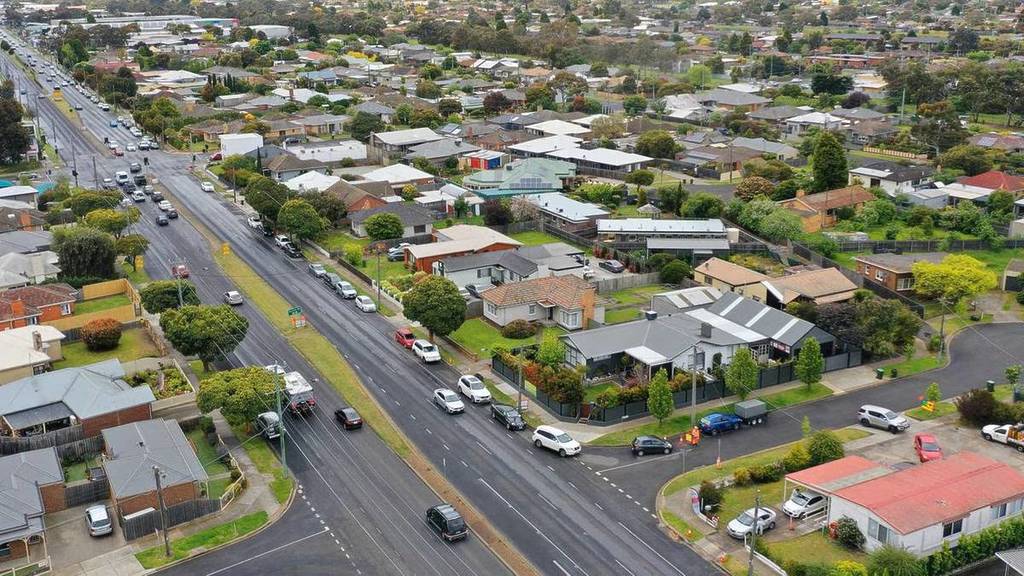
The project removed right turns onto the highway at Swan Bay Road and Resort Boulevard to reduce conflict points, replacing them with safer U-turn arrangements.
New deceleration lanes—positioned roughly 200 metres from these intersections—allow drivers more time to slow down before turning, a change expected to improve traffic flow as well as safety.
The improvements come in response to a troubling crash history along the corridor. Over the past seven years, the targeted sections have recorded at least one fatality and multiple serious incidents, according to data by Transport Victoria.
Traffic volumes underline the urgency, with about 34,000 vehicles travelling through Moolap daily, while another 22,000 pass through Wallington, making the Bellarine Highway one of the region’s most heavily used arterial roads.
A better route for locals and visitors
Fulton Hogan partnered with Big Build Roads to deliver the project on behalf of Transport Victoria, after construction began in July 2025.
The project aligns with Victoria’s broader road safety strategy, which prioritises infrastructure changes—like median barriers and intersection redesigns—as key tools in reducing fatalities and serious injuries.
Federal Minister for Regional Development Kristy McBain said the upgrades reflect a broader push to reduce road trauma nationwide. She said the upgrades would keep Australians safer on the roads and give travellers across the Bellarine Peninsula a smoother commute.
Victorian Roads Minister Ros Spence added that the works focused on practical changes proven to lower crash risk. “We’ve targeted some of the highest-risk points on the Bellarine Highway with practical upgrades like safety barriers, safer turning movements and dedicated slow-down lanes to help prevent serious crashes,” she said.
Local MP Libby Coker described the highway as a lifeline for the region, noting the upgrades aim to ensure drivers “get home safely at the end of the day.”