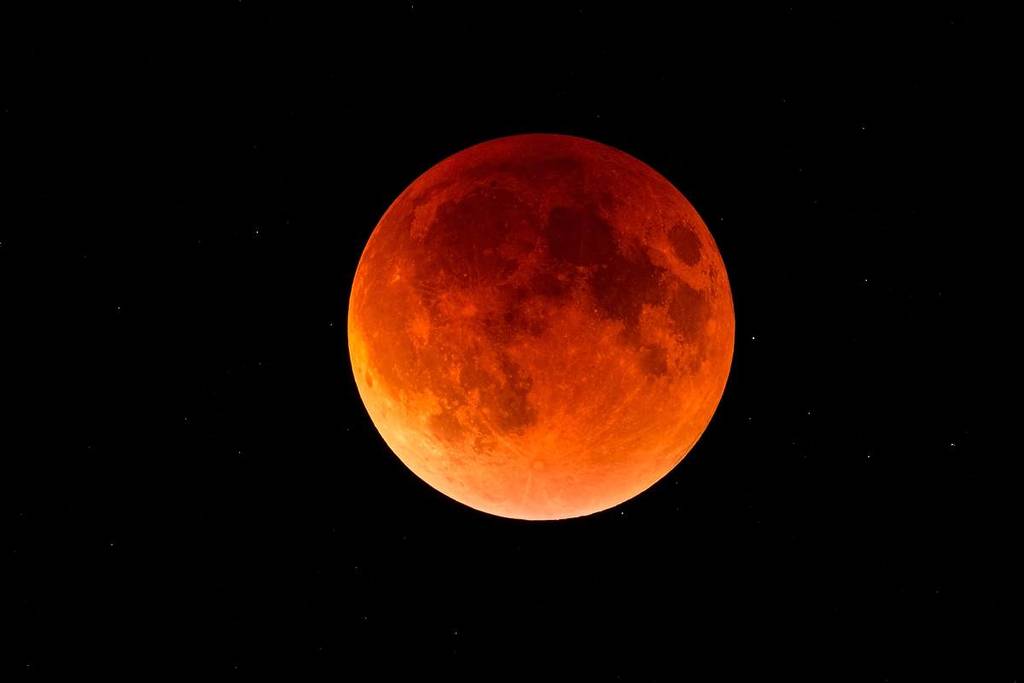
Spring is on the horizon, and as the flowers start to bloom, turn your eyes to the skies and gaze at the ‘Blood Moon’. In this total lunar eclipse, the full moon will take on a reddish hue for a whopping 82 minutes. The hauntingly beautiful Blood Moon will be visible in Melbourne in the early hours of Monday September 8.
Blood Moon 2025
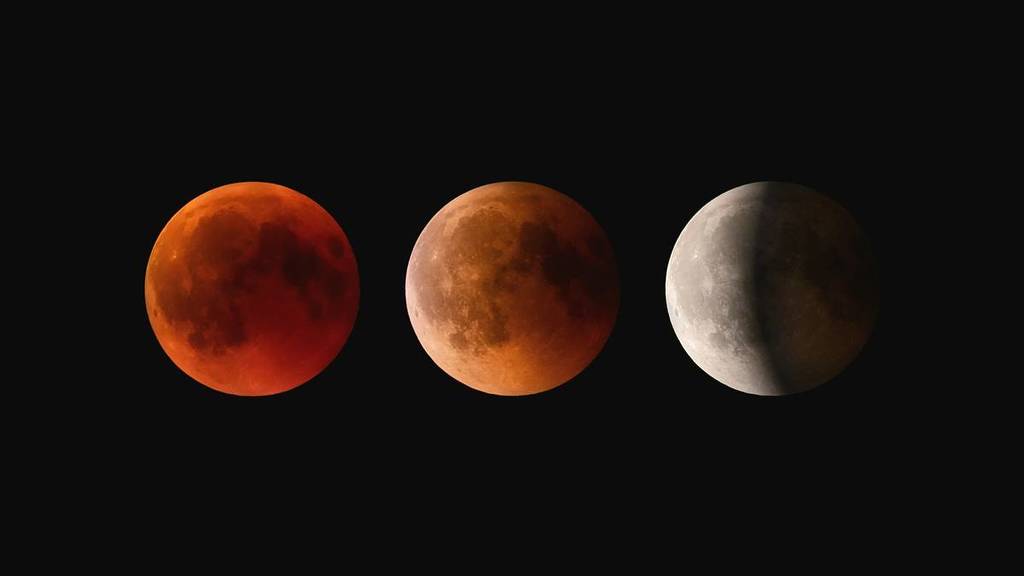
On the night of Sunday September 7 and Monday September 8, the full moon will move into darkest part of the Earth’s shadow, known as the umbra. This will block all direct sunlight from the Moon’s surface. However, some light from Earth’s atmosphere will hit the Moon, transforming it from its familiar silver glow to a red, orange or even yellow hue. The exact colour will depend on the composition of the Earth’s atmosphere.
This particular eclipse will occur about 2.7 days before perigee, the point in the Moon’s orbit when it’s closest to the Earth. This means that the Moon will also appear slightly larger that usual.
Stargazers in Victoria, New South Wales and Queensland will be able to see the entire total and partial phases of the eclipse. The only parts we miss out on are the penumbral phases, or the moment when the Moon enters the Earth’s faint outer shadow. During this time, the surface of the Moon dims slightly, but the change is hard to spot.
Meanwhile, moon watchers in most of South Australia, Western Australia and the Northern Territory will see the entire lunar eclipse, including the penumbral phases.
What time is the eclipse?
In Melbourne, the total eclipse will take place at 3:30am on Monday September 8. From this point on, the Moon will take on its bloody colour. The total lunar eclipse will end at 4:52am.
If you don’t feel like staying up that late, the partial eclipse will begin at 2:27am and end at 5:56am. During this time, the Moon will begin to enter the shadow, and gradually begin its reddish transformation.
See a full breakdown of the lunar eclipse times here.
How do I see the Blood Moon?
All you need to do is look up, but for the best experience, try to find somewhere with little light pollution. Take some time to let your eyes adjust to the darkness, and if you want to admire it up close, bring along some binoculars or even a telescope. If you don’t have any fancy equipment, your naked eyes will work just fine. Since this will take place in the middle of the night, remember to bundle up with layers.
If you miss this one, the next total lunar eclipse will take place in between March 3 and 4 in 2026.