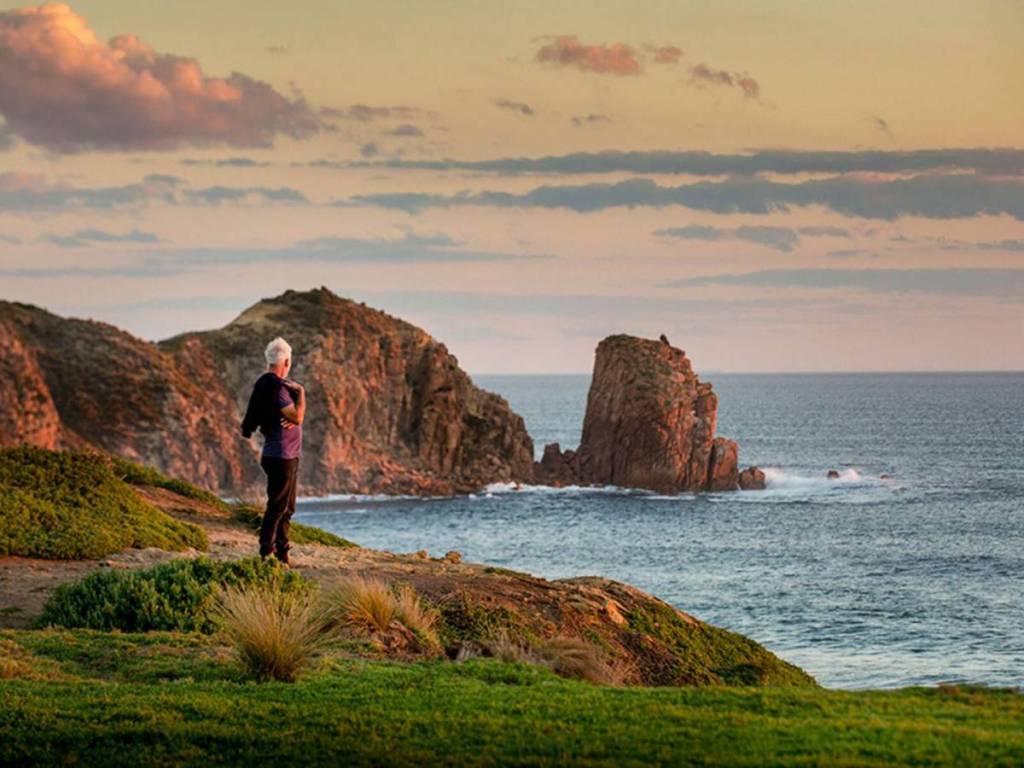

Cape Woolamai has quietly become one of Victoria’s most rewarding day-trip hikes, where pink granite cliffs rise above crashing Bass Strait swells, sweeping coastal views stretch to the horizon and wildlife encounters are never far away—all on a single, well-marked loop.
For Melbourne readers craving a big-sky coastal adventure without committing to a multi-day hike, the 8.3–8.5km Cape Woolamai circuit is an ideal escape. Here’s how to complete the Cape Woolamai Circuit Walk.
Why this walk keeps winning over hikers in springtime
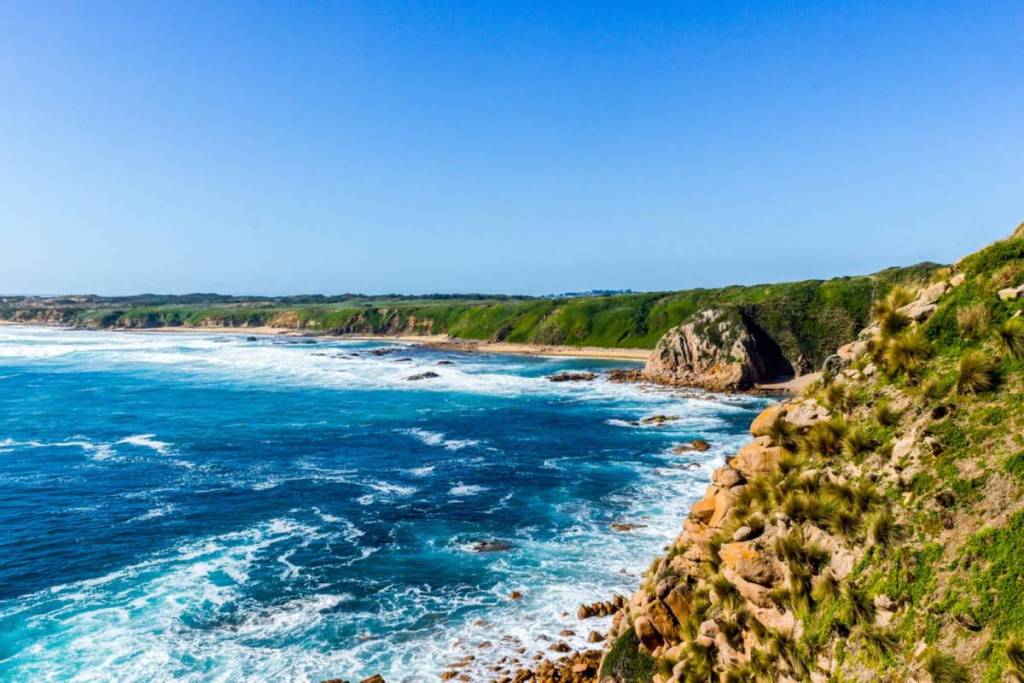
At the south-eastern tip of Phillip Island, Cape Woolamai rises 112 metres above the coast, framed by rugged headlands and the historic beacon.
The circuit links three classic tracks—the Pinnacles Walk, Beacon loop and Old Granite Quarry route—combining cliff-top views, quiet coves, quarry ruins and long surf-beach stretches in one walk. It’s free, open year-round and around two hours from Melbourne via the San Remo bridge.
Spring is an especially good time to visit. From late September, tens of thousands of short-tailed shearwaters return from their 16,000km migration to nest along the headlands, making dusk particularly spectacular in October and November.
Coastal wildflowers also add colour to the pink granite and green scrub, while cooler 16–20°C temperatures make the exposed sections more comfortable. Early spring can also bring the chance of spotting migrating whales from the lookouts.
How to tackle the Cape Woolamai Circuit
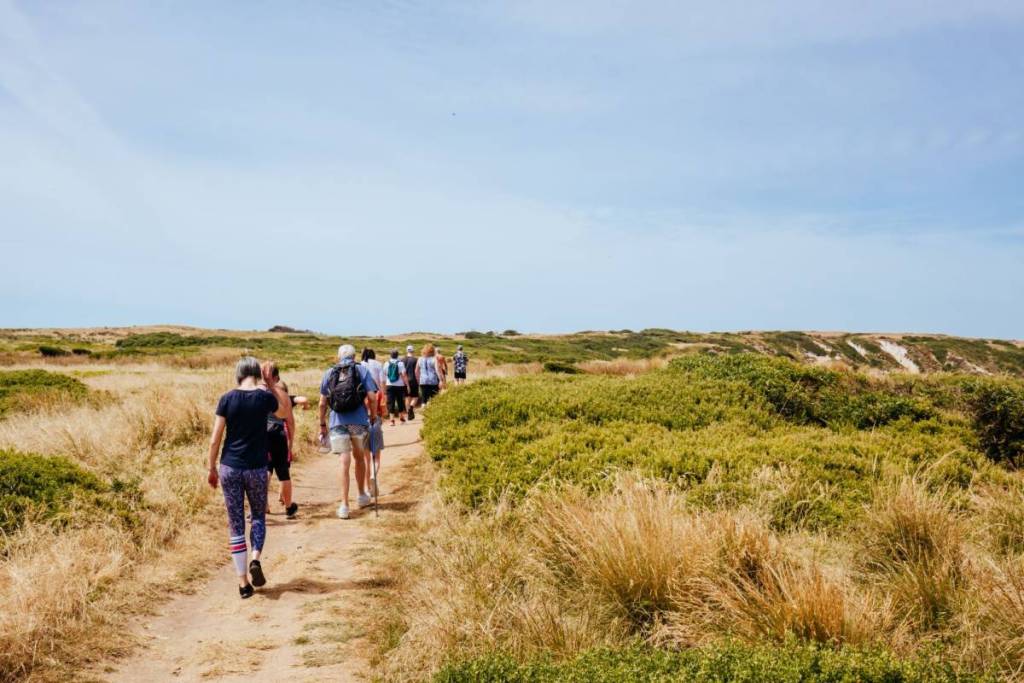
The full loop is best treated as a half-day adventure, allowing time for photos, wildlife stops and a relaxed pace. Most guides suggest 2.5–4 hours depending on fitness and how often you pause at lookouts.
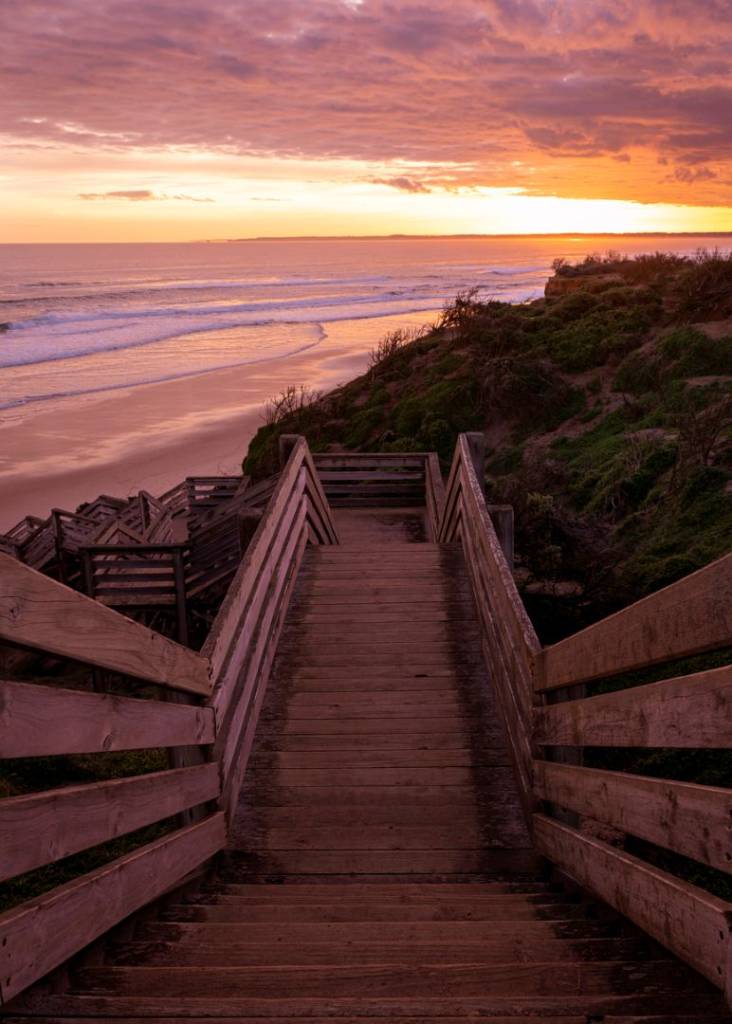
Begin at the Cape Woolamai Surf Beach car park next to the surf club and information shelter, then walk down the ramp onto Woolamai Beach and head left along the sand for roughly 900m to 1km. Look for the wooden staircase on your left before the beach ends and climb up to the grassy bluffs and clifftop track, where a signpost outlines the walking options ahead.
From here, follow the wide dirt trail south, keeping right at junctions toward the Pinnacles, and enjoy views back over Woolamai Surf Beach and out to Bass Strait as the path traces the western headland.
The Pinnacles appear as a striking cluster of vertical pink granite columns dropping into the sea, with a handy bench for photos and a breather. Continue along the black-marked track beyond the Pinnacles, climbing steadily toward the Cape Woolamai Beacon at 112m, where 360-degree views stretch across the cape, the island, San Remo and, on clear days, toward Wilsons Promontory.
Just past the beacon, follow signs to the Old Granite Quarry, a short branch off the main track that leads to a quiet cove where rectangular granite blocks and drill holes hint at its late-1800s industrial past.
At low tide you can still see remnants of the old jetty in the cove below, and from there the trail skirts Cleeland Bight, a calmer beach compared to the surf break at Woolamai, for around 1.5 to 1.6km before turning inland through coastal scrub and banksia woodland back toward the car park.
Wildlife and natural highlights

Cape Woolamai is as much a wildlife corridor as a scenic walk, with species returning as dunes and vegetation have been rehabilitated over decades. Up to half a million short-tailed shearwaters nest in the area between October and April, after migrating thousands of kilometres from the northern hemisphere, and at dusk in season you may see them circling overhead before slipping into burrows along the cliffs.
Hooded plovers, small locally endangered beach-nesting birds, make nests along the high-tide line and in dunes, so give roped-off areas a wide berth and walk near the water’s edge where possible.
Wallabies and kangaroos are commonly spotted in the scrub and grassy sections, particularly around dawn and dusk, while between May and October humpback and southern right whales migrate along the Bass Strait coast and can sometimes be seen from the headlands. In summer, hundreds of butterflies can flutter through the coastal scrub, and pelicans, oystercatchers and glossy ibis frequent the beaches and wetlands.
Stay on marked paths near cliff edges and shearwater burrows, avoid shining torches directly at birds at night, and give snakes, including Phillip Island’s copperheads, space if you encounter them. There is a car park and information shelter at the trailhead, while toilets and cafes are more readily found in nearby Newhaven and along the main Phillip Island strip.
Things to see and do nearby
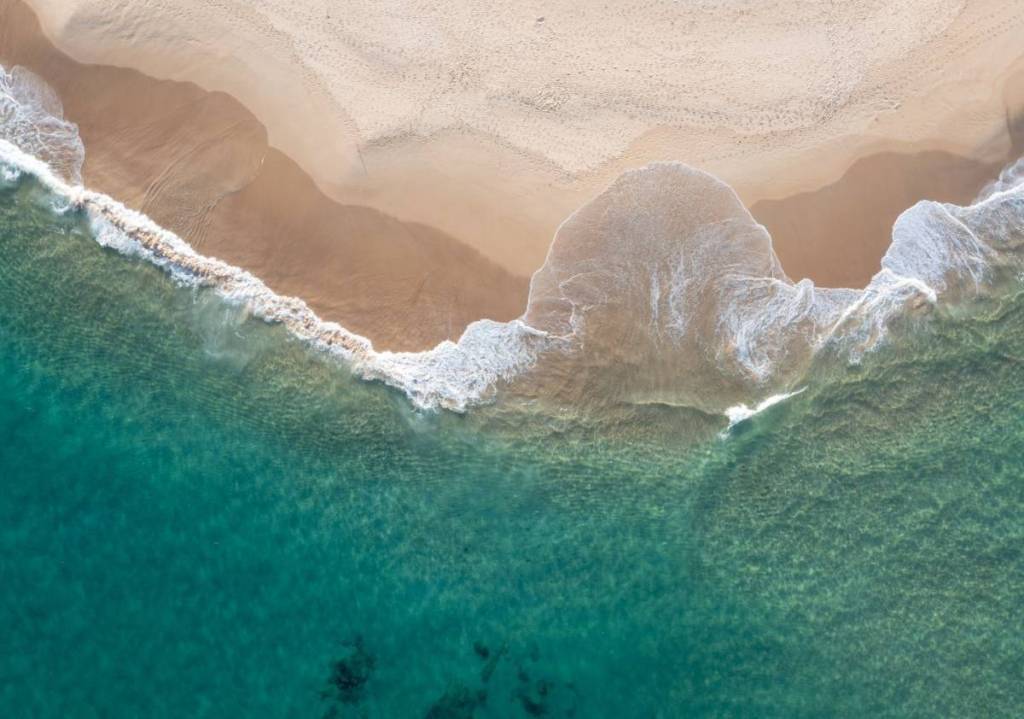
If you’re building a bigger Phillip Island day around the Cape Woolamai Circuit, several highlights sit within a short drive and don’t overlap with the walk itself.
Head west along the coast to the Nobbies for dramatic blowholes, seal colonies and the Antarctic Journey exhibit, which offers interactive insights into Southern Ocean wildlife without repeating the cliff-top views you’ve already enjoyed on the circuit.
End your day at Summerland Beach to watch little penguins come ashore at dusk; combining a Cape Woolamai morning or afternoon hike with the Penguin Parade makes for a classic Phillip Island itinerary that balances wild coastline with iconic wildlife.
The Koala Conservation Reserve and Churchill Island provide easy family-friendly stops showcasing native wildlife and historic farm life, both with boardwalks and short walks that contrast with the longer coastal loop at Cape Woolamai.
On your way to or from the island, San Remo offers fish-and-chips, pelican feedings and views of the bridge that links Phillip Island to the mainland, giving a relaxed mainland bookend to your island day.
Further afield, the Phillip Island Wine Region and local producers around Rhyll and Ventnor offer cellar-door tastings and regional produce that pair well with a post-hike lunch or early dinner.
Getting there
Travelling to Cape Woolamai from Melbourne is easiest by car, with the roughly 126km drive taking around 1 hour 30 minutes.
If you’re travelling without a car, buses run from Southern Cross Coach Terminal to Cape Woolamai several times a day, with transfers and a journey time of about three hours. Another option is to take a train to Dandenong and continue by V/Line bus to Phillip Island, while a passenger ferry runs from Stony Point to Cowes in around 45 minutes.